

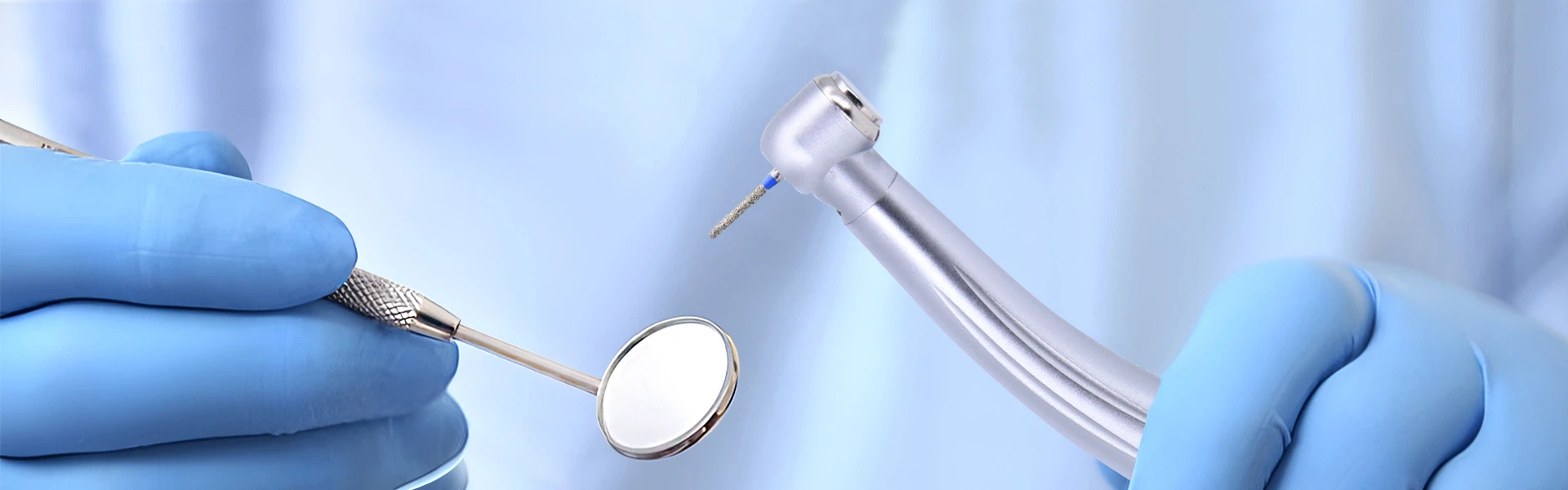
Low-Speed Dental Handpiece (Contra Angle & Straight Nose Cone)
Dental low-speed handpieces operate at 5,000–40,000 rpm, delivering powerful torque with gentle cutting performance. They serve distinct functions compared to high-speed handpieces used for tooth reduction and access cavity preparation.
Restorative Treatments
· Tooth preparation finishing After rough grinding with high-speed handpieces, use low-speed handpieces with diamond burs or rubber wheels to precisely shape finishing margins and polish tooth surfaces, preventing overheating and excessive removal of tooth structure.
· Adjustment & polishing of PFM, all-ceramic and metal crowns Trim restoration edges, adjust occlusal contacts, and polish both inner and outer crown surfaces.
· Resin composite finishing and polishing Contour composite restorations and polish filling surfaces.
Implant-Related Procedures
· Implant surgery: Bone contouring, bone leveling and removal of sharp bone margins
· Suprastructure restoration: Abutment trimming and polishing Low-speed equipment with torque control is ideal for implant torque operations and abutment refinement.
Intraoral & Laboratory Polishing
· Polish teeth and restorations using rubber wheels, brushes and polishing paste
· Trimming and finishing of temporary crowns
Root Canal Therapy
·Paired with an endodontic motor, low-speed contra-angle handpieces enable mechanical root canal instrumentation.
Periodontics & Other Applications
· Polishing calculus and restoration margins
· Removal of old fillings and temporary crowns. Low-speed cutting minimizes slipping and reduces risks of pulp exposure.