

As a supplier of External Contra Angle Handpieces, I've had the privilege of working closely with these essential dental tools. Over the years, I've witnessed firsthand the common issues that dentists and dental technicians encounter. In this blog, I'll delve into these problems, offering insights and solutions based on my experiences in the industry.
1. Mechanical Wear and Tear
One of the most prevalent problems with External Contra Angle Handpieces is mechanical wear and tear. These handpieces are subjected to high - speed rotations and constant use, which can lead to the degradation of their internal components. The bearings, for instance, are under a great deal of stress. They are responsible for ensuring smooth rotation of the bur, but over time, the friction can cause them to wear out. When the bearings start to fail, the handpiece may produce a noisy operation, and the rotation of the bur may become uneven. This not only affects the precision of dental procedures but also poses a risk to patient comfort.
Another area prone to wear is the gears. The gears in an External Contra Angle Handpiece are designed to transfer power from the air motor to the bur. Continuous use can cause the teeth of the gears to wear down, resulting in a loss of power transmission efficiency. This can lead to slower bur rotation and reduced cutting performance. To mitigate these issues, regular maintenance is crucial. Dentists and technicians should follow the manufacturer's recommended maintenance schedule, which typically includes lubrication and inspection of the bearings and gears.
2. Air Leakage
Air leakage is another common problem. External Contra Angle Handpieces rely on compressed air to operate the Internal Air Motor. If there are leaks in the air system, it can significantly affect the performance of the handpiece. Leaks can occur at various points, such as the connection between the handpiece and the air hose, or within the handpiece itself.
A small air leak may seem insignificant, but it can lead to a loss of power and inconsistent bur rotation. In addition, air leakage can also cause the handpiece to make a hissing sound, which can be distracting during dental procedures. To detect air leaks, a simple method is to apply a soapy water solution to the suspected areas. If there are bubbles forming, it indicates an air leak. Once a leak is detected, the damaged parts should be replaced promptly. This may involve replacing the O - rings or tightening the connections.
3. Bur Retention Problems
Proper bur retention is essential for the safe and effective use of an External Contra Angle Handpiece. However, many handpieces suffer from bur retention issues. The bur may become loose during use, which can be extremely dangerous as it can fly out and cause injury to the patient or the dental staff.
There are several reasons for bur retention problems. One common cause is the wear of the bur chuck. The bur chuck is the part that holds the bur in place, and over time, it can lose its gripping ability. Another reason could be improper installation of the bur. If the bur is not inserted correctly into the chuck, it may not be held securely. To address these problems, dental professionals should ensure that they are using the correct type of bur for the handpiece and that they are inserting it properly. If the bur chuck is worn, it should be replaced.

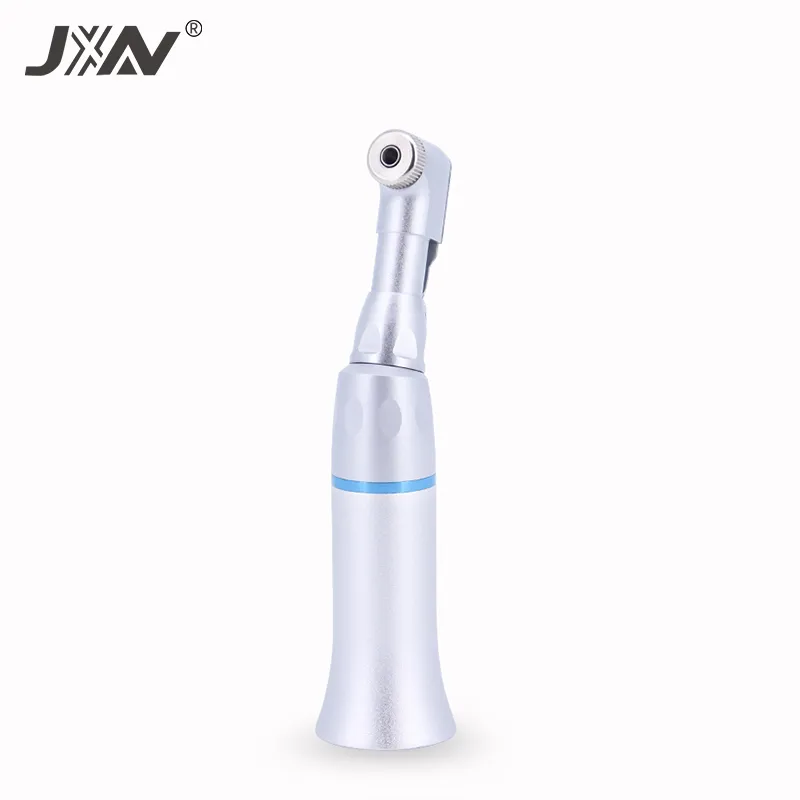
4. Overheating
External Contra Angle Handpieces can generate a significant amount of heat during operation. Overheating can be caused by several factors, including high - speed rotation, lack of proper lubrication, and restricted air flow. When the handpiece overheats, it can damage the internal components, such as the bearings and the air motor. In addition, it can also cause discomfort to the patient.
To prevent overheating, it is important to ensure that the handpiece is properly lubricated. Lubrication helps to reduce friction and dissipate heat. Dental technicians should also check the air flow regularly to make sure that there are no blockages in the air passages. If the handpiece does overheat, it should be allowed to cool down before further use.
5. Contamination
Contamination is a major concern in dental settings. External Contra Angle Handpieces can be contaminated with saliva, blood, and other debris during dental procedures. If not properly cleaned and sterilized, these contaminants can pose a risk of cross - infection.
The internal components of the handpiece are particularly vulnerable to contamination. Bacteria and other microorganisms can accumulate in the air passages, bearings, and gears. To prevent contamination, dental professionals should follow strict infection control protocols. This includes pre - cleaning the handpiece immediately after use, followed by proper sterilization. Autoclaving is the most effective method of sterilization for External Contra Angle Handpieces, but it is important to ensure that the handpiece is compatible with autoclaving.
6. Compatibility Issues
Compatibility issues can also arise when using External Contra Angle Handpieces. Dental professionals may encounter problems when trying to use different brands of burs or attachments with the handpiece. Some burs may not fit properly into the chuck, or the attachments may not be compatible with the handpiece's design.
To avoid compatibility issues, it is recommended that dental professionals use burs and attachments that are specifically designed for the External Contra Angle Handpiece they are using. They should also consult the manufacturer's guidelines for information on compatible accessories.
7. Electrical Problems (if applicable)
Some External Contra Angle Handpieces may have electrical components, such as lights or sensors. Electrical problems can occur in these handpieces, including short circuits, broken wires, or malfunctioning sensors.
Electrical issues can be difficult to diagnose and repair. If there are signs of electrical problems, such as a non - functioning light or inaccurate sensor readings, the handpiece should be sent to a qualified technician for repair. It is important not to attempt to repair the electrical components without proper training, as this can be dangerous.
Conclusion
In conclusion, while External Contra Angle Handpieces are indispensable tools in the dental field, they are prone to several common problems. These problems can affect the performance, safety, and longevity of the handpiece. However, with proper maintenance, regular inspection, and adherence to infection control protocols, many of these issues can be prevented or resolved.
As a supplier of External Contra Angle Handpieces, I am committed to providing high - quality products and excellent customer service. If you are experiencing any of the problems mentioned above or are interested in purchasing a new handpiece, I encourage you to reach out to me for more information and to discuss your specific needs. I am happy to assist you in finding the right solution for your dental practice.
References
- Dental Handpiece Manufacturer's Manuals
- Journal of Dental Technology Research
- Dental Infection Control Guidelines