

Hey there! As a supplier of External Contra Angle Handpieces, I've seen firsthand how the design of these nifty tools can make or break their usability. In this blog, I'm gonna dive deep into how different design aspects of an External Contra Angle Handpiece affect how easy and efficient they are to use.
Ergonomics: The Comfort Factor
Let's start with ergonomics. You see, when a dentist is using an External Contra Angle Handpiece for long periods, comfort is key. A well - designed handpiece should fit comfortably in the hand, reducing fatigue and allowing for better control.
First off, the shape of the handpiece matters a whole lot. A handpiece with a tapered design is generally more comfortable to hold. It allows the dentist to grip it firmly without having to strain their fingers. For example, if the handpiece is too thick or has an awkward shape, it can be difficult to maneuver, especially in tight spaces inside the mouth.

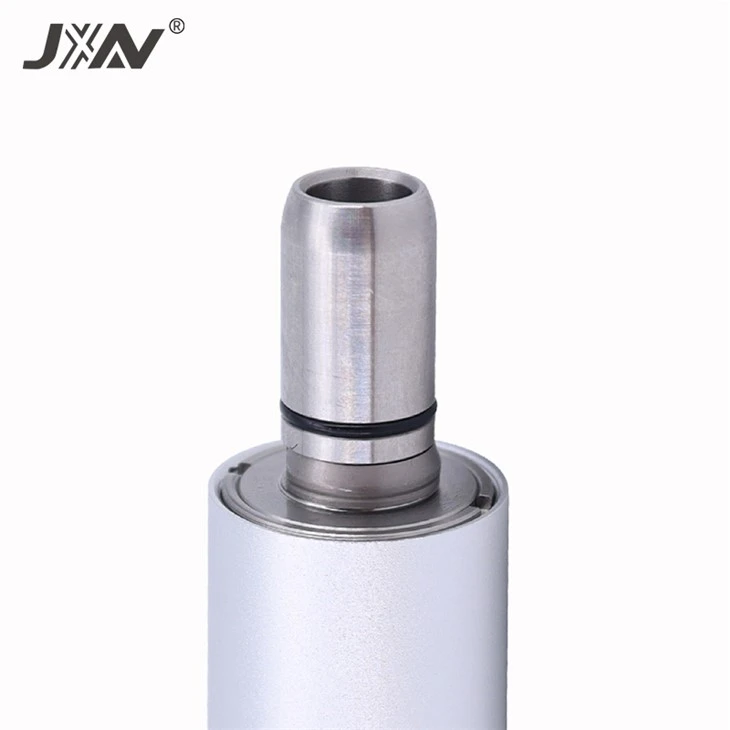
The weight of the handpiece also plays a crucial role. A heavy handpiece can quickly tire out the dentist's hand and arm. On the other hand, a lightweight design makes it easier to handle for extended periods. Our External Contra Angle Handpiece is carefully engineered to have an optimal weight, so dentists can work with ease.
Another ergonomic aspect is the texture of the handpiece. A smooth surface might be slippery, especially when the hand is wet with saliva or water during a dental procedure. That's why many of our handpieces have a textured grip. This provides better traction, allowing the dentist to maintain a secure hold even in challenging conditions.
Accessibility and Maneuverability
When it comes to dental work, getting to those hard - to - reach areas is a constant challenge. The design of the External Contra Angle Handpiece greatly affects its accessibility and maneuverability.
The angle of the head of the handpiece is a critical factor. A well - designed handpiece will have an angle that allows the dentist to reach different parts of the mouth without having to contort their hand or the patient's head. For example, a handpiece with a 90 - degree angle is great for working on the back teeth, as it can easily get into the tight spaces between the molars.
The length of the handpiece also matters. A shorter handpiece might be more maneuverable in the front of the mouth, while a longer one could be better for reaching the back of the oral cavity. Our handpieces come in different lengths to suit various dental procedures and patient anatomies.
Additionally, the flexibility of the handpiece is important. Some of our External Contra Angle Handpieces are designed with a flexible shaft. This allows the dentist to adjust the position of the handpiece more easily, making it possible to access areas that would otherwise be difficult to reach.
Durability and Maintenance
A handpiece that breaks down easily or is difficult to maintain is a nightmare for any dental practice. The design of the External Contra Angle Handpiece has a direct impact on its durability and ease of maintenance.
The materials used in the construction of the handpiece are crucial. High - quality metals and plastics are often used to ensure that the handpiece can withstand the rigors of daily use. For example, the housing of our handpieces is made from a strong, lightweight plastic that is resistant to impact and chemicals.
The internal components also need to be well - designed. Our FX Type External Air Motor is designed with precision - engineered parts that are built to last. This reduces the likelihood of breakdowns and ensures smooth operation.
Maintenance is another important aspect. A handpiece that is easy to disassemble and clean is much more practical. Our handpieces are designed with this in mind. They can be easily taken apart for cleaning and sterilization, which helps to prevent the buildup of bacteria and debris.
Compatibility and Adaptability
In a dental practice, there are often different types of burs and attachments that need to be used with the handpiece. The design of the External Contra Angle Handpiece should allow for easy compatibility and adaptability.
The chuck mechanism of the handpiece is what holds the bur in place. A well - designed chuck should be able to securely hold different sizes and types of burs. Our handpieces have a reliable chuck mechanism that can accommodate a wide range of burs, ensuring that dentists have the flexibility to use the tools they need for each procedure.
Some handpieces are also designed to be adaptable to different power sources. For example, our External Contra Angle Handpieces can be used with both air and electric power sources. This gives dental practices the option to choose the power source that best suits their needs and preferences.
Noise and Vibration
No one likes a noisy and vibrating handpiece. The design of the External Contra Angle Handpiece can significantly reduce noise and vibration, making the dental experience more comfortable for both the dentist and the patient.
The internal components of the handpiece, such as the motor and gears, can generate noise and vibration if not properly designed. Our FX Type External Air Motor is engineered to minimize these issues. It uses advanced technology to ensure smooth and quiet operation.
Vibration can also affect the dentist's control and accuracy. A handpiece with excessive vibration can make it difficult to perform delicate procedures. Our handpieces are designed with vibration - dampening features to provide a more stable and precise working experience.
Comparison with Internal Contra Angle Handpieces
It's also worth comparing External Contra Angle Handpieces with Internal Contra Angle Handpieces. While both types of handpieces have their uses, the design differences can lead to different usability characteristics.
Internal Contra Angle Handpieces are generally more compact and can be more easily maneuvered in the mouth. However, they might have limitations in terms of power and the types of burs they can accommodate. External Contra Angle Handpieces, on the other hand, are often more powerful and can handle a wider range of burs. They are also easier to maintain and clean due to their external design.
In conclusion, the design of an External Contra Angle Handpiece has a profound impact on its usability. From ergonomics and accessibility to durability and compatibility, every aspect of the design plays a role in how well the handpiece performs in a dental practice.
If you're in the market for high - quality External Contra Angle Handpieces, we'd love to hear from you. Our products are designed with all these usability factors in mind, ensuring that you get the best performance and value for your money. Contact us to start a procurement discussion and find out how our handpieces can enhance your dental practice.
References
- Dental Handpiece Technology: Principles and Practice.
- Journal of Dental Equipment and Technology.