

Hey there! As a supplier of Dental Curing Lights, I often get asked about how to measure the curing depth. It's a crucial aspect in the dental field, especially when it comes to ensuring the quality and effectiveness of dental restorations. So, let's dive right in and explore the different ways to measure curing depth.
Why Measuring Curing Depth Matters
Before we get into the measurement methods, let's quickly understand why it's so important. When using a dental curing light, the goal is to fully cure the dental material, like composite resins, to a sufficient depth. If the curing depth is insufficient, the material may not achieve its optimal mechanical properties, which can lead to issues such as wear, fracture, and secondary caries over time. On the other hand, over - curing isn't ideal either as it can cause unnecessary stress on the tooth structure. So, getting the right curing depth is a balance that directly impacts the longevity and performance of dental restorations.
Direct Measurement Methods
1. Sectioning Method
One of the most straightforward ways to measure curing depth is the sectioning method. Here's how it works:
First, you prepare a mold with a specific diameter and height. Usually, a cylindrical mold is used. Then, you fill the mold with the dental composite material. Next, you expose the material to the dental curing light for the recommended time. After the curing process is complete, you carefully remove the cured composite from the mold.
The key step is to section the cured composite. You can use a diamond saw or a similar cutting tool to make a clean cut through the center of the cylinder. Once sectioned, you can visually inspect the cross - section. The cured part of the composite will have a different appearance compared to the uncured part. The uncured part is often softer and may have a more translucent look. You can then use a caliper or a microscope with a measuring scale to measure the depth from the exposed surface to the boundary between the cured and uncured regions.
This method gives you a direct and accurate measurement of the curing depth. However, it's a destructive test, which means you can't use the tested sample for actual dental restoration.
2. Microhardness Testing
Microhardness testing is another reliable way to measure curing depth. The principle behind this method is that the hardness of a cured dental composite is significantly higher than that of an uncured one.
To perform this test, you again start by filling a mold with the dental composite and curing it using the dental curing light. After curing, you use a microhardness tester, such as a Vickers or Knoop hardness tester. The tester applies a small load to the surface of the cured composite using a diamond indenter. The size of the indentation left by the indenter is measured, and based on a pre - established calibration curve, the hardness of the material at that point can be determined.
You make a series of indentations at different depths from the exposed surface of the composite. As you move deeper into the composite, the hardness will gradually decrease until you reach the uncured region. By plotting the hardness values against the depth, you can determine the curing depth as the point where the hardness drops significantly. This method provides valuable information about the mechanical properties of the cured composite in addition to the curing depth.
Indirect Measurement Methods
1. Spectroscopy
Spectroscopy is an indirect method that can be used to measure curing depth. There are different types of spectroscopy techniques, but Fourier - transform infrared spectroscopy (FTIR) is commonly used in this context.
When a dental composite is cured, there are chemical changes that occur within the material. These chemical changes are associated with the polymerization process. FTIR can detect these chemical changes by analyzing the infrared absorption spectra of the composite.
You take a sample of the dental composite before and after curing. The FTIR instrument measures the absorption of infrared light at specific wavelengths. The peaks in the absorption spectra correspond to different chemical bonds in the composite. By comparing the spectra of the uncured and cured samples, you can identify the changes in the chemical bonds associated with polymerization.
To measure the curing depth, you can take multiple samples from different depths within the cured composite. By analyzing the FTIR spectra of these samples, you can determine the extent of polymerization at each depth. The depth at which the degree of polymerization drops below a certain threshold can be considered as the curing depth.
One of the advantages of spectroscopy is that it's a non - destructive method in the sense that you don't need to physically cut or damage the sample. However, it requires specialized equipment and expertise to perform the analysis.
2. Thermal Analysis
Thermal analysis can also be used to indirectly measure curing depth. Differential scanning calorimetry (DSC) is a popular thermal analysis technique in this regard.
DSC measures the heat flow associated with a sample as it undergoes a temperature change. When a dental composite is cured, the polymerization reaction is exothermic, which means it releases heat. By analyzing the heat flow during the curing process and after the curing is complete, you can gain insights into the degree of polymerization.
You take small samples from different depths within the cured composite. Each sample is placed in the DSC instrument, and the temperature is gradually increased. The DSC curve will show peaks and other features related to the thermal properties of the sample. By comparing the DSC curves of samples from different depths, you can determine the curing depth based on the changes in the thermal behavior associated with the degree of polymerization.
Factors Affecting Curing Depth
It's important to note that several factors can affect the curing depth, and understanding these factors is crucial for accurate measurement and proper use of dental curing lights.
1. Light Intensity
The intensity of the dental curing light plays a major role. Higher light intensity generally leads to greater curing depth. However, there's a limit to how much the intensity can be increased. Excessive light intensity can generate too much heat, which may cause damage to the tooth structure and the surrounding tissues.
2. Wavelength
The wavelength of the light emitted by the curing light is also important. Different dental composites are formulated to be cured at specific wavelengths. Most dental curing lights emit light in the blue wavelength range, which is effective for activating the photo - initiators in the composites. If the wavelength doesn't match the requirements of the composite, the curing depth may be reduced.

3. Exposure Time
The length of time the composite is exposed to the curing light is a critical factor. Longer exposure times usually result in greater curing depth, up to a certain point. However, over - exposure can also have negative effects, as mentioned earlier.
4. Composite Material Properties
The composition and properties of the dental composite itself can affect curing depth. For example, the filler content in the composite can influence how light penetrates the material. Composites with higher filler content may have reduced light penetration, resulting in a shallower curing depth.
Other Related Dental Products
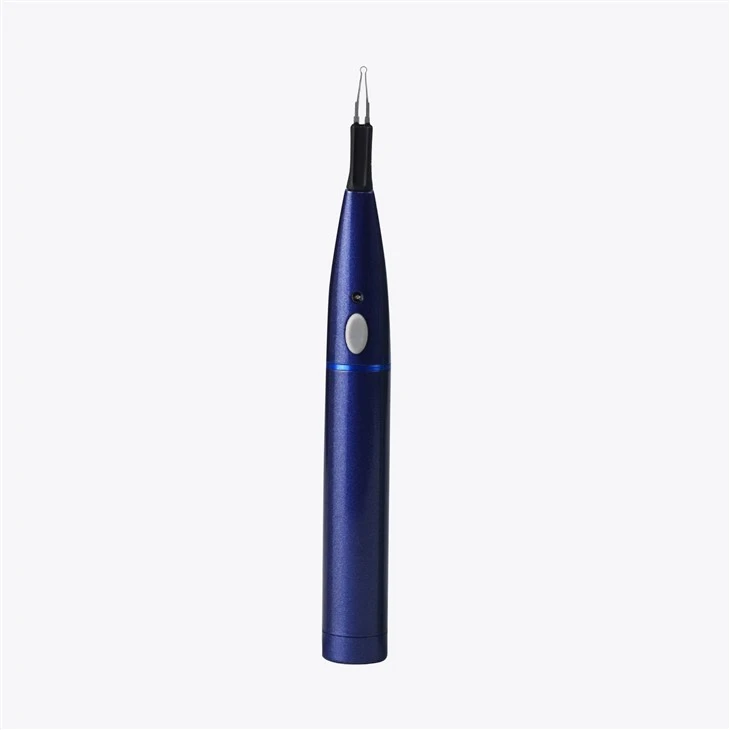
In addition to dental curing lights, there are other important dental products that are part of the dental restoration process. For example, the Gutta Percha Obturation Pen is a useful tool for root canal obturation. It helps in precisely applying gutta - percha, a material used to fill the root canal after the cleaning and shaping process.
The Dental Gutta Percha Cutter is another essential product. It's used to cut the gutta - percha to the appropriate length during the root canal treatment.
And the Dental Pulp Vatality Tester is crucial for assessing the vitality of the dental pulp. This information is important for determining the appropriate treatment plan for a tooth.
Conclusion
Measuring the curing depth of dental composites is a vital step in ensuring the quality and effectiveness of dental restorations. There are both direct and indirect methods available, each with its own advantages and limitations. By understanding the different measurement methods and the factors that affect curing depth, dental professionals can make more informed decisions when using dental curing lights.
If you're in the dental industry and are interested in high - quality dental curing lights or other related dental products, don't hesitate to reach out for a procurement discussion. We're here to provide you with the best solutions for your dental practice.
References
- “Dental Materials: Properties and Manipulation” by Craig's.
- Journal of Dental Research articles on dental composite curing.
- Textbooks on dental technology and restorative dentistry.