

Hey there, dental folks! I'm a supplier of the Dental Pulp Vatality Tester, and today we're going to dig into a pretty interesting question: Can a Dental Pulp Vitality Tester be used on teeth with amelogenesis imperfecta?
First off, let's quickly talk about what amelogenesis imperfecta is. It's a genetic disorder that messes with the formation of tooth enamel. The enamel can be too thin, have a rough texture, or be discolored. This condition can lead to a whole bunch of dental problems like increased tooth sensitivity, cavities, and even problems with chewing.
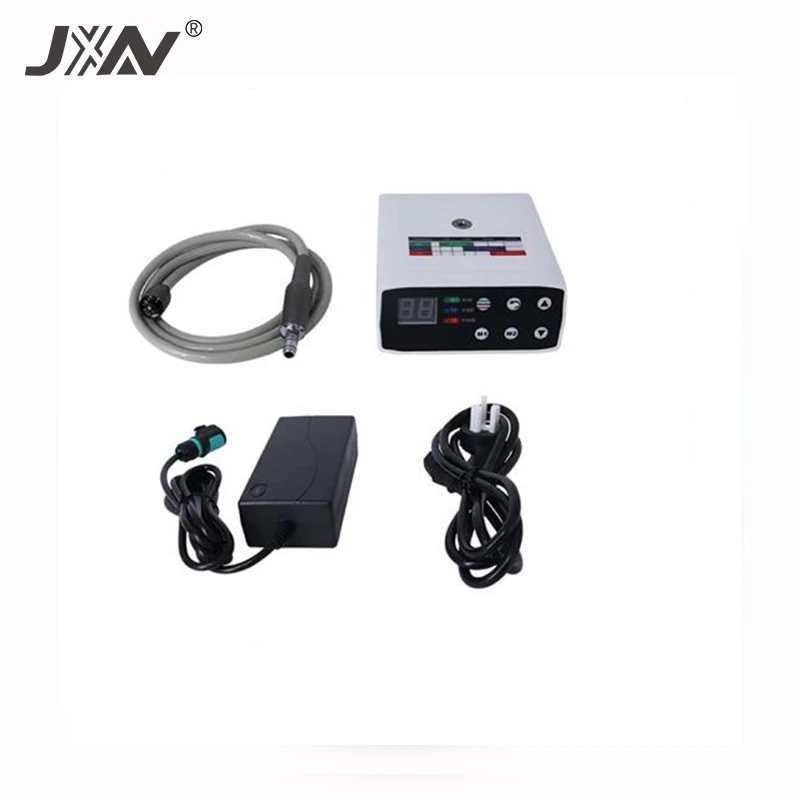
Now, the Dental Pulp Vitality Tester is a handy tool in the dental toolkit. Its main job is to figure out if the dental pulp, which is the soft tissue inside the tooth, is alive and kicking. It does this by sending a small electrical current through the tooth and measuring the response from the pulp. If the pulp is vital, it'll send a signal back, and the tester will give a reading.
So, can we use this tester on teeth with amelogenesis imperfecta? Well, it's a bit of a tricky situation. One of the big issues is the enamel. Since the enamel in teeth with amelogenesis imperfecta is abnormal, it can affect how the electrical current travels through the tooth. The thin or defective enamel might not conduct the current as well as normal enamel. This could lead to inaccurate readings. For example, the tester might show that the pulp is non - vital when it actually is, or vice versa.
Another factor to consider is the increased sensitivity of these teeth. Teeth with amelogenesis imperfecta are often more sensitive due to the poor enamel protection. When using the Dental Pulp Vitality Tester, the electrical current can cause discomfort or pain for the patient. This not only makes the testing process unpleasant but can also make it difficult to get an accurate result. The patient might move or react in a way that affects the measurement.
But that doesn't mean we can't use the tester at all. In some cases, with careful technique and proper patient management, it can still provide useful information. For instance, if the dentist takes extra time to explain the procedure to the patient and numbs the area slightly to reduce sensitivity, it might be possible to get a more reliable reading.
Let's compare this situation with using other dental tools. Take the Dental Electric Brushless LED Micro Motor. This motor is used for various dental procedures like drilling and polishing. When working on teeth with amelogenesis imperfecta, the dentist has to be extra careful because of the weak enamel. The same goes for the Endo Activator, which is used in endodontic treatments. The abnormal enamel can affect how these tools interact with the tooth.
As a supplier of the Dental Pulp Vatality Tester, I understand the importance of getting accurate results. That's why we're constantly working on improving our product. We're looking into ways to make the tester more adaptable to different dental conditions, including amelogenesis imperfecta. For example, we're exploring new algorithms that can take into account the unique electrical properties of teeth with abnormal enamel.
If you're a dentist dealing with patients who have amelogenesis imperfecta, you might be wondering what your best options are. First, you could use the Dental Pulp Vitality Tester as a part of a comprehensive assessment. Combine the results from the tester with other diagnostic methods like X - rays, visual inspection, and patient history. This can give you a more complete picture of the pulp's vitality.
Second, be open to adjusting your testing technique. You might need to use a lower electrical current setting on the tester to reduce discomfort for the patient. And make sure to communicate clearly with the patient throughout the process. Let them know what to expect and encourage them to tell you if they feel any pain or discomfort.
In conclusion, while using a Dental Pulp Vitality Tester on teeth with amelogenesis imperfecta has its challenges, it's not impossible. With the right approach and a bit of creativity, you can still get valuable information from the tester. And as a supplier, I'm here to support you in making the most of this tool.
If you're interested in learning more about our Dental Pulp Vatality Tester or have any questions about using it in challenging cases like amelogenesis imperfecta, don't hesitate to reach out. We're always happy to have a chat and discuss how our product can fit into your dental practice. Let's work together to provide the best care for your patients.
References

- American Academy of Pediatric Dentistry. (2020). Guidelines on management of children with special health care needs.
- Fejerskov, O., & Kidd, E. A. M. (2015). Dental caries: The disease and its clinical management. Wiley - Blackwell.
- Kinirons, M. T., & Lennon, M. A. (2013). Amelogenesis imperfecta: Diagnosis and management. British Dental Journal, 214(11), 563 - 569.