

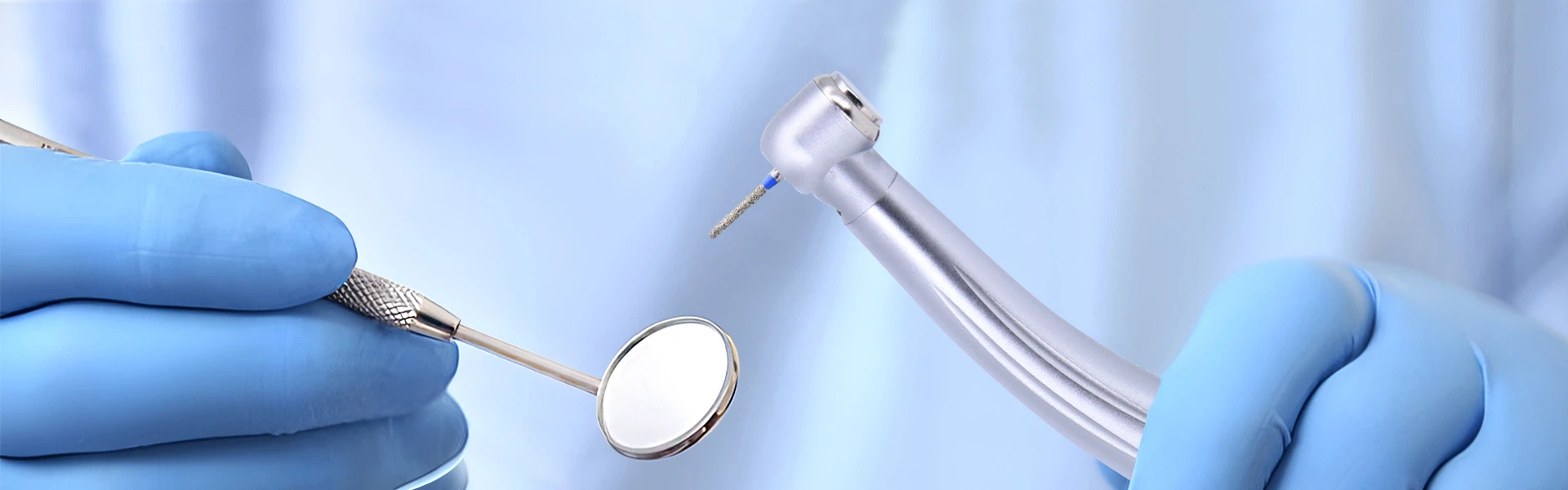

The working principle of dental sandblasting machine
The core principle of dental sandblasting machines is to use high-velocity airflow to mix microscopic abrasive particles to impact clean or pre-treat tooth surfaces. Its basic workflow includes:
1. Compressed Air Drive: The equipment generates high-velocity airflow through the air compressor.
2. Abrasive mixing: The airflow carries abrasive particles such as alumina, glycine, or sodium bicarbonate, forming a jet stream.
3.Precise injection: through the adjustable nozzle, control the abrasive 3. flow rate and impact angle to achieve precise processing,
Compared with traditional mechanical sanding, sandblasting technology can reduce dental tissue damage, especially suitable for cleaning sensitive areas such as adjacent surfaces, pits, and fissures.

Clinical application of dental sandblasting machine
1. Caries prevention and pit and fissure cleaning
Sandblasting technology effectively removes plaque and early pigmentation and is suitable for children's pit and fissure sealing pretreatment, which is gentler than traditional acid etching and retains more healthy tooth enamel.
2. Pre-treatment of restoration bonding
Sandblasting before bonding restorations such as all-ceramic crowns, veneers, and inlays can increase tooth surface roughness, improve bond strength, and avoid excessive cutting of tooth tissue.
3. Periodontal treatment assistance
Sandblasting (especially glycine blasting) gently removes subgingival plaque and tartar, reduces gum bleeding, and is suitable for periodontal maintenance treatment.

Technological innovation of dental sandblasting machine
In recent years, abrasive blasting equipment has made breakthroughs in the following aspects:
Intelligent pressure regulation: Automatically adjusts the blast intensity according to the treatment needs to avoid excessive damage.
Low-noise design: Optimizes airflow dynamics and reduces patient discomfort.
Environmentally friendly abrasive recycling: Some high-end models are equipped with abrasive recovery systems to reduce the cost of consumables.
Portable trend: Miniaturized, cordless sandblasting machines are more suitable for chairside operation and outdoor diagnosis and treatment.

Future prospects
With the integration of artificial intelligence (AI) and 3D printing technologies, future dental sandblasting machines may have: 1.AI assisted precise control: Automatically adjust injection parameters through real-time image analysis.
2. Better biocompatible abrasives: such as degradable particles, reducing environmental pollution.
3. Remote diagnosis and treatment integration: Combined with 5G technology, remote sandblasting parameter guidance is realized.
Dental sandblasting technology is developing in the direction of more precision, comfort, and intelligence, becoming an important part of modern minimally invasive dentistry. With the continuous advancement of technology, sandblasting machines will play a greater value in the fields of prevention, restoration, implantation, periodontal treatment, etc., helping oral health management to reach new heights.