

Sterilization is a critical aspect of maintaining the safety and functionality of dental high-speed handpieces. As a dental high-speed handpiece supplier, I understand the importance of providing handpieces that are not only efficient but also adhere to the highest standards of sterilization. In this blog, I will discuss the various sterilization methods suitable for dental high-speed handpieces.
Why Sterilization of Dental High-Speed Handpieces is Crucial
Dental high-speed handpieces come into direct contact with patients' oral cavities, which can be a reservoir of various microorganisms, including bacteria, viruses, and fungi. If not properly sterilized, these handpieces can act as a vehicle for cross - contamination between patients, leading to the spread of infectious diseases. Moreover, proper sterilization also helps in maintaining the performance and longevity of the handpieces.

Autoclaving
Autoclaving is one of the most common and effective sterilization methods for dental high - speed handpieces. It uses high - pressure steam to kill microorganisms. The standard autoclaving cycle typically involves a temperature of 121 - 134°C (250 - 273°F) and a pressure of 15 - 30 pounds per square inch (psi) for a specific duration, usually 15 - 30 minutes.
The advantage of autoclaving is its high efficacy in killing a wide range of microorganisms, including spores, which are highly resistant to many other sterilization methods. However, it is important to note that not all dental high - speed handpieces are suitable for autoclaving. Some handpieces may have components that can be damaged by the high temperature and pressure. For example, certain plastic or rubber parts may melt or deform.
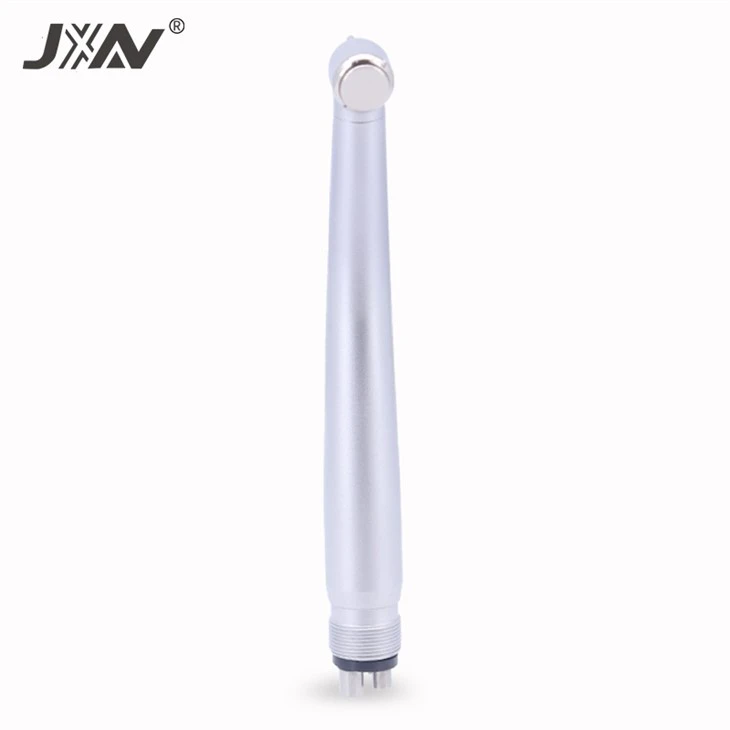
As a supplier, we ensure that our High Speed Handpiece Single Water Spray 114 is designed to withstand autoclaving. Our engineers have carefully selected materials and designed the internal structure to ensure that the handpiece can go through multiple autoclaving cycles without losing its performance.
Chemical Sterilization
Chemical sterilization involves the use of chemical agents to kill microorganisms. Common chemical sterilants used in dentistry include glutaraldehyde, peracetic acid, and hydrogen peroxide. These chemicals can be used in immersion baths or in special sterilization chambers.
Glutaraldehyde is a well - known chemical sterilant that has been used for many years. It is effective against a wide range of microorganisms, including bacteria, viruses, and fungi. However, it has some drawbacks. It has a relatively long exposure time, usually several hours, to achieve complete sterilization. Also, it can be toxic to humans if not handled properly, and it has a strong odor.
Peracetic acid is another option. It is a powerful oxidizing agent that can rapidly kill microorganisms. It has a shorter exposure time compared to glutaraldehyde, usually 30 - 60 minutes. It is also less toxic and has a lower odor. Our High Speed Handpiece Single Water Spray can be safely sterilized using peracetic acid - based sterilization methods, as the materials used in its construction are resistant to the chemical's corrosive effects.
Dry Heat Sterilization
Dry heat sterilization uses hot air to kill microorganisms. It typically requires a higher temperature and a longer time compared to autoclaving. The standard dry heat sterilization cycle involves a temperature of 160 - 170°C (320 - 338°F) for 2 - 4 hours.
Dry heat sterilization is suitable for some dental high - speed handpieces, especially those with components that may be damaged by moisture. However, it is not as effective as autoclaving in killing spores. Also, the high temperature can cause some materials to degrade over time.
Ultrasonic Cleaning and Disinfection
Before subjecting dental high - speed handpieces to any sterilization method, ultrasonic cleaning is often recommended. Ultrasonic cleaning uses high - frequency sound waves to create microscopic bubbles in a cleaning solution. These bubbles implode, creating a scrubbing action that can remove debris, blood, and other contaminants from the handpiece.
After ultrasonic cleaning, the handpiece can be disinfected using a suitable disinfectant. Disinfection is not the same as sterilization, as it only reduces the number of microorganisms to a safe level, rather than completely eliminating them. However, it is an important pre - step before sterilization.
Factors to Consider When Choosing a Sterilization Method
- Handpiece Design and Materials: Different handpieces are made of different materials, and some materials may be more resistant to certain sterilization methods than others. For example, handpieces with ceramic bearings may be more suitable for autoclaving compared to those with plastic bearings.
- Cost: Autoclaving may require an initial investment in an autoclave machine, but the cost per cycle is relatively low. Chemical sterilization may involve the cost of purchasing chemical agents, which can be expensive over time.
- Time Efficiency: Autoclaving and dry heat sterilization usually take longer compared to some chemical sterilization methods. In a busy dental practice, time efficiency may be an important factor.
Our Commitment as a Supplier
As a dental high - speed handpiece supplier, we are committed to providing high - quality handpieces that are compatible with various sterilization methods. Our 5 LED High Speed Handpiece Single Water Spray is designed with the latest technology and high - quality materials to ensure that it can be safely and effectively sterilized using different methods.
We also provide detailed instructions on how to properly sterilize our handpieces to ensure their longevity and performance. Our R & D team is constantly working on improving the design of our handpieces to make them more resistant to the effects of sterilization.
Conclusion
Choosing the right sterilization method for dental high - speed handpieces is crucial for patient safety and the performance of the handpieces. Autoclaving, chemical sterilization, dry heat sterilization, and ultrasonic cleaning all have their own advantages and disadvantages. As a supplier, we strive to provide handpieces that can be effectively sterilized using these methods.
If you are interested in purchasing our dental high - speed handpieces or have any questions about sterilization methods, please feel free to contact us for procurement discussions. We are here to provide you with the best products and solutions for your dental practice.
References
- "Infection Control in Dentistry: Principles and Practice" by Robert A. Cawson
- "Dental Instrumentation: A Contemporary Approach" by Stanley F. Malamed