

Hey there! As a supplier of Aluminium Oxide Sandblasting Unit, I often get asked about how to choose the appropriate particle size of aluminium oxide for these units. It's a crucial question because the right particle size can make a huge difference in the performance and results of your sandblasting operations. So, let's dive right in and break it down.
First off, let's understand what aluminium oxide sandblasting is all about. Aluminium oxide is a popular abrasive material used in sandblasting units due to its hardness, durability, and effectiveness in removing surface contaminants, rust, paint, and other unwanted materials. Sandblasting with aluminium oxide involves propelling tiny particles of the abrasive at high speeds onto a surface, which then abrades and cleans it.
Now, when it comes to choosing the particle size of aluminium oxide, there are several factors you need to consider. The main ones are the type of surface you're working on, the level of cleaning or finishing you need, and the equipment you're using.
Type of Surface
The material and condition of the surface you're sandblasting play a big role in determining the appropriate particle size. For softer surfaces like wood or plastic, you'll want to use a finer particle size to avoid causing damage. A fine particle size, typically in the range of 100 to 220 grit, is gentle enough to clean the surface without leaving deep scratches. On the other hand, for harder surfaces like metal or concrete, you can go for a coarser particle size. Coarser particles, such as those in the 24 to 60 grit range, have more cutting power and can quickly remove tough contaminants and coatings.
Level of Cleaning or Finishing
Are you just looking to remove a light layer of dirt or rust, or do you need to completely strip a surface down to bare metal? If it's a light cleaning job, a finer particle size will do the trick. It will clean the surface without altering its texture too much. But if you're dealing with heavy rust, thick paint, or stubborn coatings, a coarser particle size is necessary. It will provide the aggressive abrasion needed to get the job done.
After the initial cleaning, you might also want to consider using a finer particle size for a finishing pass. This can help smooth out the surface and give it a more uniform appearance.
Equipment
The capabilities of your Aluminium Oxide Sandblasting Unit also influence the particle size you can use. Some sandblasting units are designed to work best with specific particle sizes. If you try to use a particle size that's too large or too small for your equipment, it can lead to problems such as clogging, uneven blasting, or reduced efficiency.
Most sandblasting units come with a recommended particle size range in the user manual. Make sure to check this before making a decision. If you're unsure, you can always contact the manufacturer or supplier for advice.
Common Particle Sizes and Their Applications
Let's take a closer look at some common particle sizes of aluminium oxide and their typical applications:

- 24 - 60 grit: This is a coarse particle size suitable for heavy-duty cleaning and stripping. It's commonly used for removing thick rust, old paint, and scale from metal surfaces. It can also be used for preparing concrete surfaces for coating or resurfacing.
- 80 - 120 grit: A medium particle size that offers a good balance between cleaning power and surface finish. It's often used for general-purpose sandblasting, such as removing light rust and paint from metal, and for preparing surfaces for painting or powder coating.
- 150 - 220 grit: A fine particle size that's ideal for delicate surfaces and finishing work. It can be used for cleaning and polishing wood, plastic, and glass, as well as for achieving a smooth finish on metal surfaces.
- 240 - 400 grit: This is an extra-fine particle size used mainly for precision work and final finishing. It's commonly used in industries such as aerospace and automotive for polishing and deburring small parts.
Testing and Experimentation
Even with all this information, the best way to determine the right particle size for your specific application is through testing and experimentation. You can start by selecting a particle size based on the factors we've discussed, and then try it out on a small, inconspicuous area of the surface. Observe the results and make adjustments as needed.
If the particle size is too coarse, you might notice excessive surface damage or a rough finish. If it's too fine, the cleaning process might be slow and ineffective. By testing different particle sizes, you can find the one that gives you the best combination of cleaning power and surface finish.
Conclusion
Choosing the appropriate particle size of aluminium oxide for your Aluminium Oxide Sandblasting Unit is a crucial step in achieving successful sandblasting results. By considering the type of surface, the level of cleaning or finishing required, and the capabilities of your equipment, you can make an informed decision. Remember to test different particle sizes on a small area before starting a large project to ensure the best outcome.
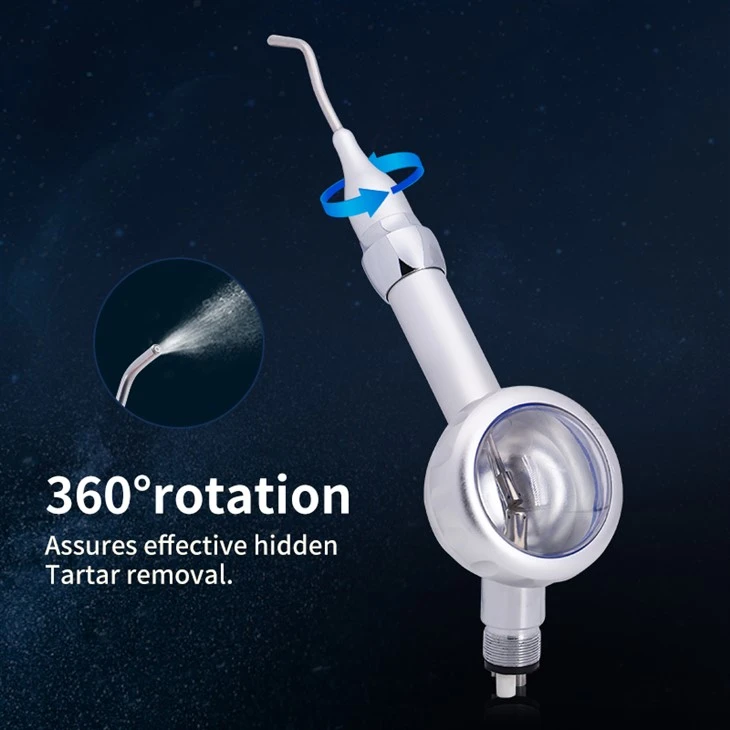
If you're in the market for a high-quality sandblasting unit or need more advice on choosing the right aluminium oxide particle size, feel free to reach out. We're here to help you find the perfect solution for your sandblasting needs. Whether you're looking for a Stainless Steel Air Prophy Unit Sandblasting Machine or a Colorful Air Prophy Unit Sandblasting Machine, we've got you covered. Let's start a conversation and see how we can work together to meet your requirements.
References
- "Sandblasting Handbook" - A comprehensive guide to sandblasting techniques and equipment.
- Manufacturer's manuals for Aluminium Oxide Sandblasting Units.
- Industry standards and best practices for abrasive blasting.