

Hey there! As a supplier of Internal Air Motors, I've seen firsthand how crucial it is to understand the relationship between air flow rate and the speed of these motors. In this blog, I'll break down how air flow rate affects the speed of an Internal Air Motor, and why it matters for your business.
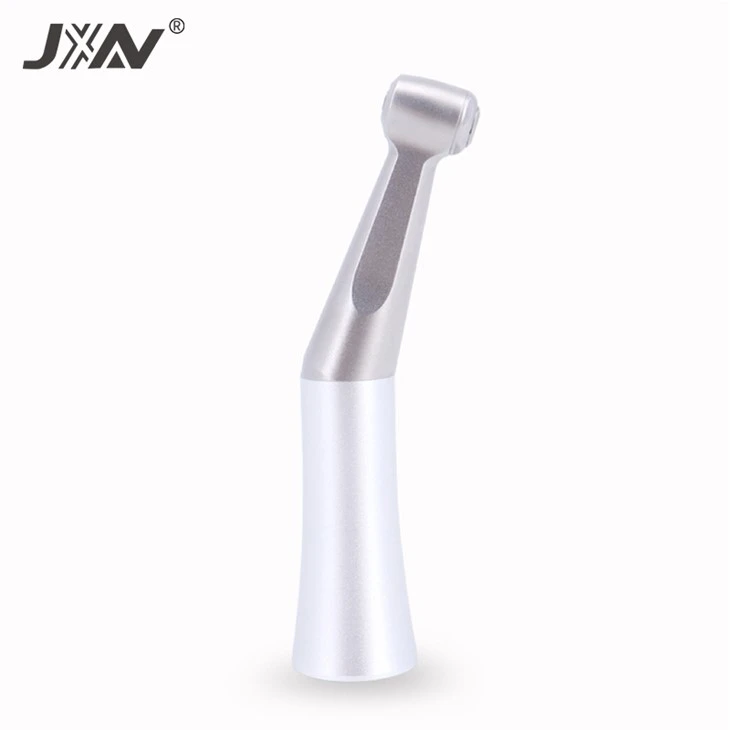
First off, let's talk about what an Internal Air Motor is. An Internal Air Motor is a type of motor that uses compressed air to generate power. It's commonly used in dental tools, like the FX Type External Contra Angle Handpiece and the FX Type External Straight Handpiece. These motors are known for their reliability, efficiency, and ability to provide high torque at low speeds.
Now, let's get into the nitty-gritty of how air flow rate affects the speed of an Internal Air Motor. The air flow rate is the volume of air that passes through the motor per unit of time. It's typically measured in cubic feet per minute (CFM) or liters per minute (LPM). When you increase the air flow rate, you're essentially providing more air to the motor, which in turn increases its speed.
Think of it like a bicycle. If you pedal harder, you're providing more power to the wheels, and the bike goes faster. Similarly, when you increase the air flow rate to an Internal Air Motor, you're providing more power to the motor, and it spins faster.
However, it's important to note that there's a limit to how much you can increase the air flow rate. If you increase it too much, you can actually damage the motor. This is because the motor is designed to operate within a specific range of air flow rates. If you exceed this range, you can cause the motor to overheat, wear out faster, or even break down completely.
So, how do you determine the optimal air flow rate for your Internal Air Motor? Well, it depends on a few factors, such as the type of motor, the application, and the specific requirements of your equipment. In general, you'll want to consult the manufacturer's specifications to find the recommended air flow rate for your motor.
Once you've determined the optimal air flow rate, you'll need to make sure that your air supply system is capable of providing it. This may involve upgrading your compressor, installing a larger air line, or adding a regulator to control the air flow rate.
In addition to affecting the speed of the motor, the air flow rate can also have an impact on its performance and efficiency. For example, if the air flow rate is too low, the motor may not be able to generate enough power to operate at its maximum capacity. This can result in slower speeds, reduced torque, and increased wear and tear on the motor.
On the other hand, if the air flow rate is too high, the motor may be operating at a higher speed than necessary, which can also lead to increased wear and tear. In addition, a high air flow rate can cause the motor to consume more energy, which can increase your operating costs.
So, as you can see, finding the right balance between air flow rate and motor speed is crucial for maximizing the performance and efficiency of your Internal Air Motor. By understanding how these two factors are related, you can make informed decisions about your air supply system and ensure that your equipment is operating at its best.
Now, let's talk about why this matters for your business. If you're in the dental industry, for example, having a reliable and efficient Internal Air Motor is essential for providing high-quality patient care. A motor that operates at the right speed and performance level can help you complete procedures more quickly and accurately, which can improve patient satisfaction and increase your productivity.
In addition, using a motor that's operating at its optimal air flow rate can help you save money on energy costs and reduce the need for maintenance and repairs. This can translate into significant savings over time, which can have a positive impact on your bottom line.
So, if you're looking for a reliable and efficient Internal Air Motor for your dental equipment, look no further. As a supplier of Internal Air Motors, I have a wide range of products to choose from, including the FX Type External Contra Angle Handpiece and the FX Type External Straight Handpiece. I can also help you determine the optimal air flow rate for your motor and provide you with the support and guidance you need to ensure that your equipment is operating at its best.
If you're interested in learning more about our products or have any questions about how air flow rate affects the speed of an Internal Air Motor, please don't hesitate to contact me. I'd be happy to discuss your specific needs and help you find the right solution for your business.
References

- "Internal Air Motor Basics," Manufacturer's Guide
- "Understanding Air Flow Rate and Its Impact on Motor Performance," Industry Journal Article