

Enamel tufts are small, ribbon - like structures that extend from the dentino - enamel junction (DEJ) into the enamel. They are thought to be areas of hypomineralization and can have implications for dental health and the function of dental pulp. As a supplier of Dental Pulp Vitality Testers, understanding how these testers work in cases of enamel tuft is crucial. This blog post will explore the working mechanism of Dental Pulp Vitality Testers in the context of enamel tufts, the significance of enamel tufts in dental pulp assessment, and how our testers can offer accurate results.
Understanding Enamel Tufts
Enamel tufts are one of the intrinsic anatomical features of the enamel. They are composed of hypomineralized enamel rods and inter - rod enamel. The exact cause of their formation is still debated, but it is believed to be related to the stress during enamel development. These tufts can act as potential pathways for bacteria and other noxious agents to reach the dentin and subsequently the dental pulp.
When bacteria penetrate through enamel tufts, they can cause demineralization of the dentin. This process can lead to the inflammation of the dental pulp, which is a highly sensitive connective tissue containing nerves, blood vessels, and cells. Detecting the vitality of the dental pulp in the presence of enamel tufts is essential for appropriate dental treatment planning.
How Dental Pulp Vitality Testers Work
Dental Pulp Vitality Testers operate based on different principles. The most common types are thermal and electrical testers.
Thermal Testers
Thermal testers work by applying either cold or heat to the tooth surface. In the case of cold testing, a refrigerant spray or a cold stick (such as dry ice) is used. When the cold stimulus is applied to the tooth, if the pulp is vital, the nerve endings in the pulp will be stimulated, and the patient will feel a sharp, short - lived pain.
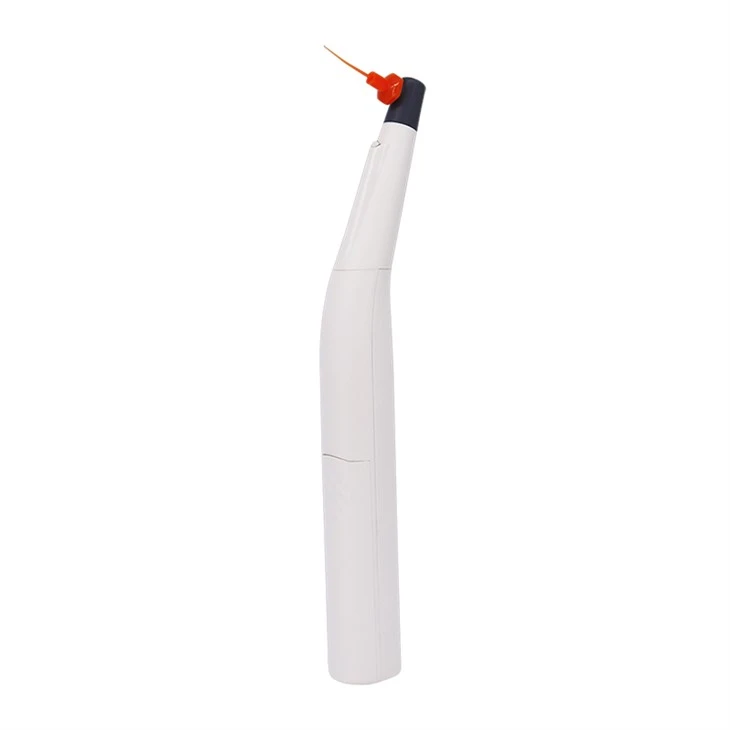

In the presence of enamel tufts, the effectiveness of thermal testing can be affected. Enamel tufts, being hypomineralized areas, may conduct the cold stimulus more readily compared to normal enamel. This can lead to a more intense or faster - onset pain response in some cases. However, it can also be a challenge because the hypomineralized nature of enamel tufts may cause false - positive results. For example, the cold may be perceived as pain even when the pulp is in a state of early reversible inflammation, and the actual damage to the pulp may not be as severe as the pain response suggests.
On the other hand, heat testing is less commonly used but can also provide valuable information. A heated gutta - percha stick can be used for heat testing. The heat is transferred through the tooth structure to the pulp. A vital pulp will respond to the heat with pain. Enamel tufts may act as conduits for heat transfer, similar to cold. But heat testing requires more caution as excessive heat can cause irreversible damage to the pulp.
Electrical Testers
Electrical Dental Pulp Vitality Testers work by passing a small electrical current through the tooth. The current stimulates the nerve fibers in the dental pulp. When the pulp is vital, the nerve fibers will generate an action potential, which is detected by the tester. The tester then measures the threshold of electrical stimulation required to elicit a response from the patient.
In cases of enamel tufts, the electrical conductivity of the tooth may be altered. Enamel tufts, due to their hypomineralized state, may have a higher electrical conductivity compared to normal enamel. This means that the electrical current may be more easily transmitted through the enamel tufts to the dentin and pulp. As a result, the threshold of electrical stimulation required to detect a response from the pulp may be lower than in a tooth without enamel tufts.
However, it is important to note that electrical testing also has limitations. It only assesses the nerve response of the pulp and does not provide information about the blood supply to the pulp. In some cases, the nerve may still be functioning even when the blood supply to the pulp is compromised, leading to false - positive results.
Significance of Accurate Testing in the Presence of Enamel Tufts
Accurate dental pulp vitality testing in cases of enamel tufts is of utmost importance for several reasons.
First, it helps in diagnosing the stage of pulp inflammation. If the pulp is in a state of reversible inflammation, conservative treatment such as a dental filling may be sufficient. However, if the pulp is irreversibly inflamed, root canal treatment may be necessary. Misdiagnosis due to inaccurate testing can lead to inappropriate treatment, which can cause further pain and complications for the patient.
Second, accurate testing can guide the dentist in determining the prognosis of the tooth. If the pulp is vital, there is a better chance of saving the tooth without extensive treatment. In contrast, a non - vital pulp may require extraction or more invasive procedures.
Our Dental Pulp Vitality Testers
As a supplier of Dental Pulp Vitality Testers, we understand the unique challenges posed by enamel tufts. Our testers are designed to provide accurate and reliable results in various dental conditions, including those with enamel tufts.
Our electrical testers are equipped with advanced technology that can compensate for the altered electrical conductivity caused by enamel tufts. They have a precise calibration system that allows for accurate measurement of the electrical threshold, reducing the risk of false - positive or false - negative results.
In addition, we also offer thermal testers that are easy to use and provide consistent results. Our cold - testing devices are designed to deliver a controlled and standardized cold stimulus, ensuring that the pain response is a true reflection of the pulp vitality.
Complementary Dental Products
In addition to our Dental Pulp Vitality Testers, we also offer a range of complementary dental products that can be used in conjunction with the pulp testing process. For example, the Gutta Percha Obturation Pen is a useful tool for root canal treatment, which may be necessary if the dental pulp is found to be non - vital. The Dental Electric Brushless LED Micro Motor provides high - precision and efficient dental drilling, which can be used during the diagnosis and treatment process. The Endo Activator is beneficial for enhancing the effectiveness of root canal irrigation, ensuring better disinfection of the root canal system.
Contact Us for Procurement
If you are a dental professional looking for high - quality Dental Pulp Vitality Testers and complementary dental products, we invite you to contact us for procurement. Our team of experts is ready to provide you with detailed information about our products, answer your questions, and assist you in making the right purchasing decisions. Whether you are dealing with cases of enamel tufts or other dental conditions, our products can help you achieve accurate diagnoses and successful treatments.
References
- Ten Cate's Oral Histology: Development, Structure, and Function. 8th edition. Elsevier.
- Sturdevant's Art and Science of Operative Dentistry. 6th edition. Mosby.
- Dental Pulp: Biology, Pathology, and Therapeutics. Edited by Simon, J. H., Machtou, P., & Tay, F. R. Springer.