

Hey there! As a supplier of Dental Handpiece Burs, I've seen firsthand how crucial these little tools are in a dental operatory. But what happens when you're working in a space that's a bit on the cramped side? Well, that's what I'm here to chat about today.
Let's start with the basics. Dental handpiece burs are like the unsung heroes of the dental world. They're the tiny cutting tools that attach to dental handpieces, and they're used for all sorts of things, from preparing teeth for fillings to shaping crowns. But in a limited - space dental operatory, using these burs can be a bit of a challenge.
First off, let's talk about the layout. In a small operatory, every inch of space counts. You've got the patient chair, the dental unit with all its bells and whistles, and of course, the dentist and any assistants. This means that the movement of the dental handpiece, and by extension, the burs, needs to be super precise.
One of the key things to consider is the type of handpiece you're using. There are high - speed and low - speed handpieces, and each has its own advantages in a limited space. High - speed handpieces, like the ones with a High Speed Handpiece Cartridge Rotor, are great for quick cutting and drilling. They can get the job done fast, which is a huge plus when you're trying to work efficiently in a tight space. The high - speed rotation allows for precise cuts without having to move the handpiece around too much.
On the other hand, low - speed handpieces are more versatile. They're used for tasks like polishing and finishing, and they give the dentist more control. In a small operatory, this extra control can be a game - changer. You can make small, delicate adjustments without worrying about knocking into other equipment.
Now, let's get into how the burs themselves work in this limited space. Dental handpiece burs come in all shapes and sizes, each designed for a specific task. For example, round burs are great for creating small cavities, while fissure burs are used for cutting grooves. In a small operatory, choosing the right bur is even more important. You want to pick a bur that can do the job with the least amount of movement.
The connection between the handpiece and the bur is also crucial. A good quality Dental Handpiece Connect Tube ensures a stable and secure connection. This is important because any looseness or instability can make it difficult to control the bur, especially in a confined space. A well - connected bur allows for smooth and accurate cutting, which is essential when you're working in close quarters.
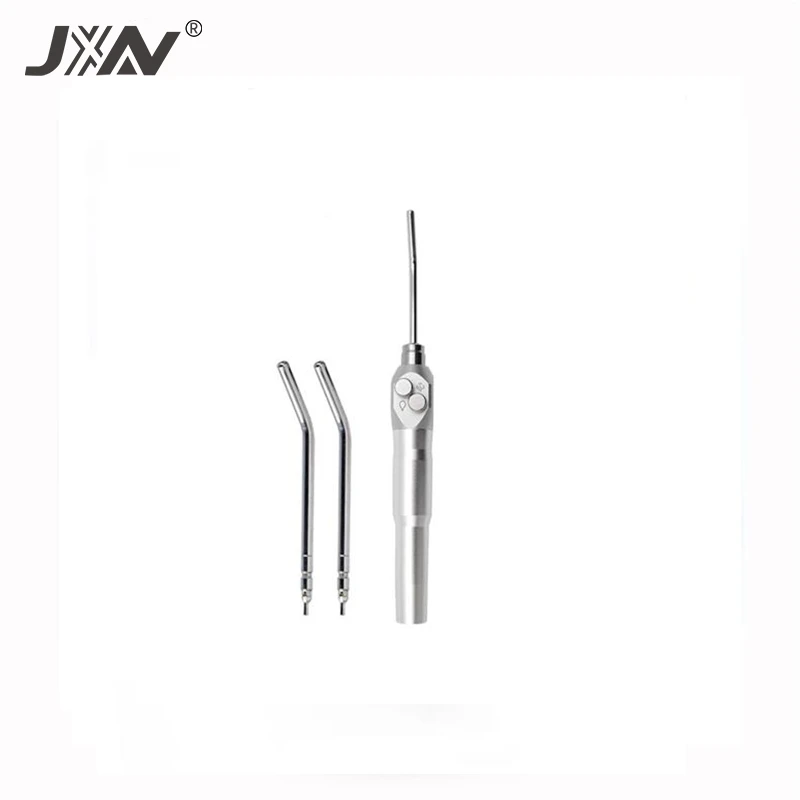
Another aspect to consider is the visibility. In a limited - space operatory, it can be hard to get a good view of what you're doing. That's where the Dental Air Water Triple Syringe comes in handy. This tool can be used to clean the area around the tooth, removing debris and keeping the field of view clear. With a clear view, the dentist can better control the handpiece and the bur, making the procedure more efficient.
Let's talk about the workflow in a small dental operatory. Time management is key. You want to have all your tools within easy reach, so you don't have to waste time searching for the right bur. A well - organized tray with all the necessary burs and other instruments can make a big difference. You can also plan your procedure in advance, deciding which burs you'll need for each step. This way, you can move quickly and smoothly through the process without any unnecessary delays.
In terms of safety, working in a limited space requires extra caution. The risk of accidentally hitting other equipment or the patient is higher. Dentists need to be extra careful when handling the handpiece and the burs. They should also make sure that the handpiece is properly maintained. A well - maintained handpiece reduces the risk of malfunctions, which could be dangerous in a small space.
Now, let's think about the patient experience. In a small operatory, the patient may feel a bit cramped and uncomfortable. It's important for the dentist to communicate clearly with the patient, explaining what they're doing and why. This can help to ease the patient's anxiety. Also, using the burs as gently as possible can make the procedure more tolerable for the patient.
As a supplier of Dental Handpiece Burs, I know how important it is to have high - quality products. Our burs are made from top - notch materials, ensuring durability and precision. We offer a wide range of burs to suit different needs, whether you're working in a large or small dental operatory.

If you're a dentist or a dental practice owner looking for reliable Dental Handpiece Burs, we'd love to talk to you. We understand the challenges of working in a limited - space operatory, and we're here to help you find the right tools for the job. Whether you need advice on which burs to choose or you're looking to place an order, don't hesitate to reach out. We're always happy to have a chat and see how we can support your dental practice.
In conclusion, working with dental handpiece burs in a limited - space dental operatory is all about precision, organization, and safety. By choosing the right handpiece, the right burs, and using the proper accessories, you can make the most of the space you have. And remember, having high - quality products from a trusted supplier can make a world of difference. So, if you're interested in learning more about our Dental Handpiece Burs, just get in touch, and we'll be more than happy to assist you.
References
- Dental textbooks on operative dentistry
- Industry reports on dental equipment usage in small spaces