

As a supplier of Dental Handpiece Burs, I've witnessed firsthand the crucial role these tools play in dental procedures. One question that often arises in the dental community is how Dental Handpiece Burs perform in wet and dry conditions. In this blog, I'll delve into this topic, exploring the differences in performance, the factors at play, and the implications for dental practitioners.
Performance in Wet Conditions
When Dental Handpiece Burs are used in wet conditions, the presence of water serves several important functions. Firstly, water acts as a coolant. During the cutting process, friction between the bur and the tooth generates heat. Excessive heat can cause damage to the tooth structure, including pulp inflammation and even necrosis. By continuously irrigating the cutting site with water, the temperature is kept within a safe range, minimizing the risk of thermal damage.
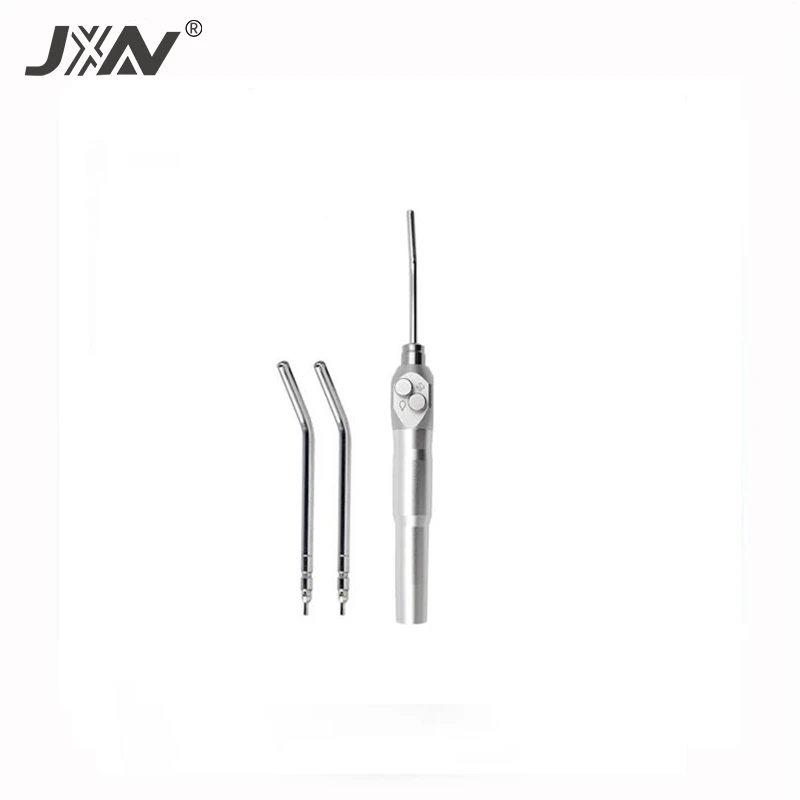
Secondly, water helps to flush away debris. As the bur cuts through the tooth, it creates a mixture of tooth particles, saliva, and other substances. If this debris is not removed, it can accumulate around the bur, reducing its cutting efficiency and potentially causing clogging. The water flow from the Dental Air Water Triple Syringe effectively washes away the debris, allowing the bur to maintain a clean cutting surface and operate at optimal performance.
In addition, the lubricating effect of water can enhance the cutting action of the bur. It reduces the friction between the bur and the tooth, making the cutting process smoother and more efficient. This can result in less resistance for the dentist, allowing for more precise control over the bur and potentially reducing the time required for the procedure.

However, using Dental Handpiece Burs in wet conditions also presents some challenges. The presence of water can make it more difficult to visualize the cutting site, especially in areas with limited access. Dentists may need to use additional lighting or suction devices to improve visibility. Moreover, the water flow can sometimes interfere with the bonding process if composite materials are being used, as it can wash away the bonding agents.
Performance in Dry Conditions
In dry conditions, Dental Handpiece Burs operate without the cooling and lubricating effects of water. This can lead to increased heat generation during cutting, which is a major concern. Without proper cooling, the temperature at the cutting site can rise rapidly, potentially causing irreversible damage to the tooth. As a result, dry cutting is generally not recommended for extended periods or for procedures that involve deep cutting into the tooth.
Another drawback of dry cutting is the accumulation of debris. Without the water to flush it away, the debris can build up on the bur, reducing its cutting efficiency and increasing the risk of clogging. This can lead to a decrease in the quality of the cut, as the bur may start to tear or chip the tooth rather than making a clean cut.
However, there are some situations where dry cutting may be necessary or preferred. For example, in some cases where the patient has a strong gag reflex, using water can exacerbate the problem. In such situations, dry cutting may be a more practical option. Additionally, in certain diagnostic procedures where the dentist needs to assess the tooth structure without the interference of water, dry cutting may be used.
Factors Affecting Performance
Several factors can influence the performance of Dental Handpiece Burs in both wet and dry conditions. The type of bur is one of the most important factors. Different burs are designed for specific applications, and their performance can vary significantly. For example, carbide burs are known for their high cutting efficiency and durability, while diamond burs are better suited for fine finishing and polishing.
The speed and torque of the handpiece also play a crucial role. Higher speeds generally result in faster cutting, but they can also generate more heat. Dentists need to find the right balance between speed and heat generation to ensure optimal performance. Additionally, the torque of the handpiece affects the ability of the bur to cut through hard materials. A handpiece with sufficient torque is essential for efficient cutting, especially in dry conditions.
The quality of the Dental Handpiece Connect Tube Dental Handpiece Connect Tube can also impact performance. A well-designed and properly maintained tube ensures a consistent flow of air and water (if applicable), which is essential for the proper operation of the bur. A damaged or clogged tube can lead to uneven water flow, reduced cooling, and decreased cutting efficiency.
Implications for Dental Practitioners
Understanding the performance of Dental Handpiece Burs in wet and dry conditions is essential for dental practitioners. They need to carefully consider the specific requirements of each procedure and choose the appropriate cutting conditions accordingly. In most cases, wet cutting is the preferred method due to its cooling, lubricating, and debris-flushing properties. However, there may be situations where dry cutting is necessary, and dentists should be aware of the potential risks and take appropriate precautions.
Dentists also need to ensure that they are using high-quality Dental Handpiece Burs and accessories. Investing in reliable products can improve the performance of the burs, reduce the risk of complications, and ultimately enhance the quality of patient care. As a supplier of Dental Handpiece Burs, I am committed to providing dental professionals with the best products and support to meet their needs.
Conclusion
In conclusion, the performance of Dental Handpiece Burs in wet and dry conditions is significantly different. Wet cutting offers several advantages, including cooling, debris removal, and lubrication, but it also presents some challenges. Dry cutting, on the other hand, has limited applications due to the increased risk of heat generation and debris accumulation. Dental practitioners need to carefully evaluate the specific requirements of each procedure and choose the appropriate cutting conditions to ensure optimal performance and patient safety.
If you are a dental professional looking for high-quality Dental Handpiece Burs and accessories, I encourage you to contact me for more information. We offer a wide range of products that are designed to meet the diverse needs of the dental industry. Whether you need carbide burs, diamond burs, or other dental accessories, we have the expertise and products to support your practice. Let's start a conversation and explore how we can work together to improve your dental procedures.
References
- Cohen, S., & Hargreaves, K. M. (Eds.). (2018). Pathways of the Pulp. Elsevier.
- Sturdevant, J. R., Robbins, J. W., O’Keefe, S. J., & Moore, B. K. (2015). Sturdevant’s Art and Science of Operative Dentistry. Elsevier.
- Walton, R. E., & Torabinejad, M. (2015). Principles and Practice of Endodontics. Elsevier.