

Hey there, fellow dental enthusiasts! As a supplier of Internal Contra Angle Handpieces, I often get asked a crucial question: "Can an Internal Contra Angle Handpiece be sterilized?" Well, let's dive right into this topic and clear up any confusion.
First off, let's understand what an Internal Contra Angle Handpiece is. It's a vital tool in the dental industry, used for a variety of procedures like cavity preparation, polishing, and more. It's designed to reach those hard - to - access areas in the mouth, making it an indispensable part of a dentist's toolkit.
Now, the big question about sterilization. The short answer is yes, an Internal Contra Angle Handpiece can be sterilized, but it's not as simple as just throwing it in a sterilizer. There are specific methods and considerations that need to be taken into account.
One of the most common methods of sterilization is autoclaving. Autoclaving uses high - pressure steam to kill bacteria, viruses, and other microorganisms. However, not all Internal Contra Angle Handpieces are suitable for autoclaving. Some models have components that can be damaged by the high temperatures and pressures involved. Before autoclaving, it's essential to check the manufacturer's instructions. If your handpiece is autoclave - compatible, make sure to follow the correct cycle parameters. Usually, a cycle of around 134°C for 3 - 10 minutes at a specific pressure is recommended.
Another option is chemical sterilization. This involves using chemical agents to disinfect the handpiece. There are various chemical disinfectants available in the market, each with its own set of instructions. The advantage of chemical sterilization is that it can be done at lower temperatures, which is less likely to damage the handpiece. But the downside is that it may take longer, and some chemicals can be corrosive to certain parts of the handpiece over time.
Ultrasonic cleaning is often used as a pre - sterilization step. It helps to remove debris, blood, and other organic matter from the handpiece. The handpiece is placed in an ultrasonic cleaner filled with a special cleaning solution. The ultrasonic waves create tiny bubbles that implode, dislodging dirt and contaminants from the surfaces and crevices of the handpiece.
Now, let's talk about the importance of proper sterilization. In a dental setting, preventing the spread of infection is of utmost importance. Patients trust their dentists to use clean and safe instruments. A poorly sterilized handpiece can be a breeding ground for bacteria and viruses, which can lead to cross - contamination between patients. This not only puts the patients at risk but also the dental staff.
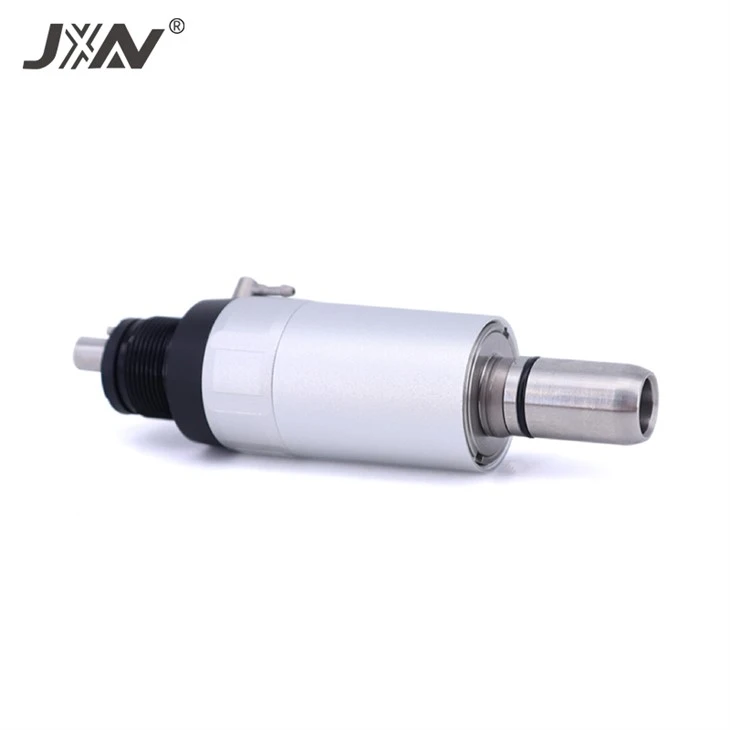

As a supplier, I always recommend regular maintenance and proper sterilization of the Internal Contra Angle Handpieces. This not only ensures the safety of the patients but also extends the lifespan of the handpiece. A well - maintained handpiece will perform better and require fewer repairs.
When it comes to choosing an Internal Contra Angle Handpiece, it's important to consider its sterilization requirements. Some handpieces are designed with sterilization in mind, with features like easy - to - disassemble parts for thorough cleaning. Others may have special coatings or materials that can withstand the rigors of sterilization.
If you're in the market for other dental handpieces, we also offer External Straight Handpiece, Internal Air Motor, and FX Type External Air Motor. These handpieces also have their own sterilization procedures, and we can provide you with all the necessary information.
In conclusion, an Internal Contra Angle Handpiece can be sterilized, but it requires careful consideration and following the right procedures. Whether you choose autoclaving, chemical sterilization, or a combination of methods, always refer to the manufacturer's guidelines. If you have any questions about sterilization or need advice on choosing the right handpiece for your practice, don't hesitate to reach out. We're here to help you make the best decisions for your dental needs.
If you're interested in purchasing Internal Contra Angle Handpieces or any of our other dental products, we're open for business and ready to have a discussion about your requirements. Let's work together to ensure your dental practice has the best - quality, properly sterilized instruments.
References
- Dental Instrument Sterilization Guidelines, American Dental Association
- Handbook of Dental Equipment and Materials, Various Authors