

Hey there, dental pros! I'm a supplier of dental low-speed handpieces, and I often get asked if these handy tools can be used for implant procedures. Well, let's dig into this topic and find out.
First off, let's understand what a dental low-speed handpiece is. It's a versatile tool that operates at lower speeds compared to high-speed handpieces. Low-speed handpieces are great for a variety of dental tasks like polishing, removing decay, and working on soft tissues. They offer more control and precision, which is crucial in many dental procedures.
Now, when it comes to implant procedures, things get a bit more complex. Implant placement involves drilling into the jawbone to create a socket for the implant fixture. This requires a high level of accuracy and stability to ensure the implant is placed correctly and securely.
So, can a dental low-speed handpiece be used for implant procedures? The short answer is, it depends.
Advantages of Using a Low-Speed Handpiece for Implants
One of the main advantages of using a low-speed handpiece is the control it provides. The lower speed allows the dentist to have better tactile feedback, which is essential when working near delicate structures like nerves and blood vessels. This can help reduce the risk of damage during the implant placement process.

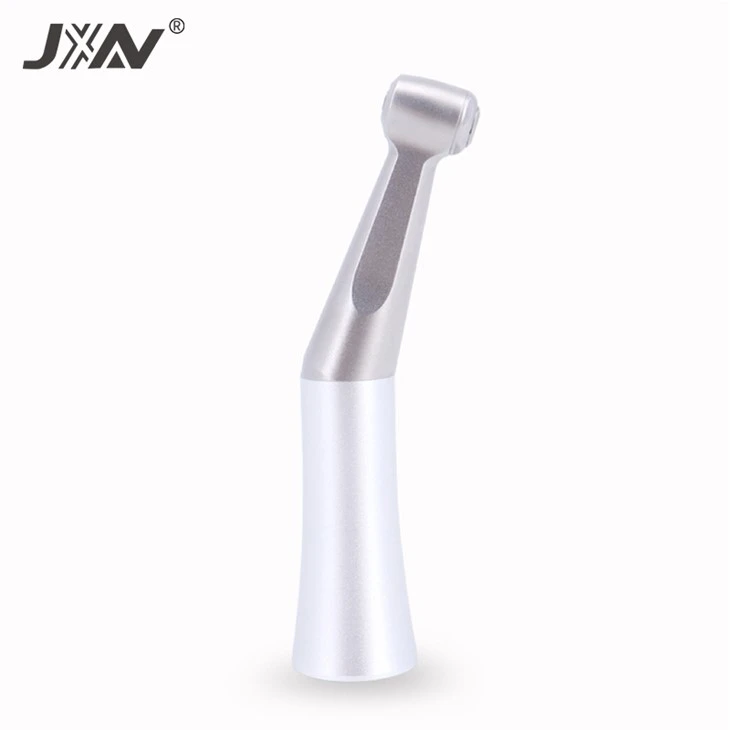
Another benefit is the versatility. Some dental low-speed handpieces come with interchangeable heads and attachments, which can be useful for different stages of the implant procedure. For example, you might use a specific attachment for preparing the implant site and another for inserting the implant.
We offer a range of great low-speed handpieces that could potentially be used in implant procedures. Check out our FX Type External Contra Angle Handpiece. It's designed for precision work and offers excellent control, which could be handy during implant placement. Also, our FX Type External Straight Handpiece is a reliable option for straight-line access in the mouth, which might be needed in certain implant cases. And don't forget our External Straight Handpiece, which is known for its durability and ease of use.
Limitations of Using a Low-Speed Handpiece for Implants
However, there are also some limitations. One of the biggest challenges is the power. Implant procedures often require a significant amount of force to drill into the dense jawbone. Low-speed handpieces may not have enough torque to handle this task efficiently, especially in cases where the bone is particularly hard.
Another issue is the heat generation. Drilling at low speeds for an extended period can generate more heat, which can be harmful to the surrounding bone tissue. This can lead to bone necrosis and affect the success rate of the implant.
Factors to Consider
If you're thinking about using a low-speed handpiece for implant procedures, there are a few factors you need to consider.
- Patient's Condition: The patient's bone density and overall oral health play a crucial role. If the patient has dense bone, a low-speed handpiece may not be sufficient. On the other hand, if the bone is softer or the implant site is less complex, a low-speed handpiece could be a viable option.
- Skill and Experience: The dentist's skill and experience are also important. A more experienced dentist may be able to compensate for the limitations of a low-speed handpiece and use it effectively in implant procedures.
- Type of Implant: Different types of implants may require different drilling techniques and power levels. Some implants are designed to be placed with high-speed drills, while others may be more compatible with low-speed handpieces.
Alternatives to Low-Speed Handpieces for Implants
In many cases, high-speed drills are the preferred choice for implant procedures. High-speed drills offer more power and can drill through the bone more quickly and efficiently. They also generate less heat, which is better for the bone tissue.
However, high-speed drills also have their drawbacks. They can be more difficult to control, and there is a higher risk of damage to the surrounding tissues if not used properly.
Conclusion
So, to sum it up, a dental low-speed handpiece can potentially be used for implant procedures, but it's not without its challenges. It offers better control and versatility, but may lack the power needed for some cases. The decision to use a low-speed handpiece should be based on the patient's condition, the dentist's skill, and the type of implant.
If you're interested in learning more about our dental low-speed handpieces or have any questions about using them in implant procedures, feel free to reach out. We're here to help you make the best choice for your dental practice. Whether you're a small clinic or a large dental hospital, we've got the right tools for you. Let's start a conversation and see how we can work together to improve your dental procedures.
References
- Cohen, S., & Hargreaves, K. M. (Eds.). (2018). Pathways of the Pulp. Elsevier.
- Newman, M. G., Takei, H. H., Klokkevold, P. R., & Carranza, F. A. (2017). Carranza's Clinical Periodontology. Elsevier.